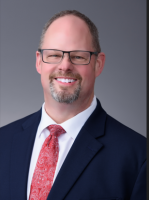

David E. Williamson, Esq., Business Attorney in Cincinnati, Ohio
Over 27 years of legal practice · focused on Business, Civil Rights, and General
Office Managing AttorneyatMarshall Dennehey
Cincinnati, OH
Practicing business in Cincinnati since 1999.
- 27+
- Years practicing
- 5
- Bar admissions
Are you David E. Williamson, Esq.?
This profile was built from public bar records and is still unclaimed. Claim it free to control your photo, bio, and fees — and get client inquiries sent straight to you.
Quick answer
David E. Williamson, Esq. is an office managing attorney based in Cincinnati, OH. The practice focuses on Business, Civil Rights, and General. David has over 27 years of legal experience. Currently practicing at Marshall Dennehey.
- Based in
- Cincinnati, OH
- Experience
- over 27 years
- Known for
- Business · Civil Rights · General
- Handles Business, Civil Rights, and General matters from Cincinnati, OH.
- Over 27 years of practice as a licensed attorney.
About David E. Williamson, Esq.: David E. Williamson, Esq. is an office managing attorney based in Cincinnati, OH. The practice focuses on Business, Civil Rights, and General. David has over 27 years of legal experience. Currently practicing at Marshall Dennehey.
Areas of practice
Practice areas handled by David E. Williamson, Esq.
David concentrates on business, civil rights, general, insurance, and litigation. Each area below outlines the kind of case David handles, typical outcomes to expect, and how the intake process starts.
Business
View other Business attorneys
Civil Rights
View other Civil Rights attorneys
General
View other General attorneys
Insurance
View other Insurance attorneys
Litigation
View other Litigation attorneys
Medical Malpractice
View other Medical Malpractice attorneys
Personal Injury
View other Personal Injury attorneys
Business cases in Cincinnati, Ohio
David takes business matters in Cincinnati, Ohio. Typical engagements include intake calls to scope the issue, review of any records or filings you already have, and a written strategy memo before David agrees to represent you.
Civil Rights cases in Cincinnati, Ohio
David takes civil rights matters in Cincinnati, Ohio. Typical engagements include intake calls to scope the issue, review of any records or filings you already have, and a written strategy memo before David agrees to represent you.
General cases in Cincinnati, Ohio
David takes general matters in Cincinnati, Ohio. Typical engagements include intake calls to scope the issue, review of any records or filings you already have, and a written strategy memo before David agrees to represent you.
Insurance cases in Cincinnati, Ohio
David takes insurance matters in Cincinnati, Ohio. Typical engagements include intake calls to scope the issue, review of any records or filings you already have, and a written strategy memo before David agrees to represent you.
Litigation cases in Cincinnati, Ohio
David takes litigation matters in Cincinnati, Ohio. Typical engagements include intake calls to scope the issue, review of any records or filings you already have, and a written strategy memo before David agrees to represent you.
Biography
About David E. Williamson, Esq. — Over 27 years of Ohio business experience
David E. Williamson, Esq. is an office managing attorney based in Cincinnati, OH. The practice focuses on Business, Civil Rights, and General. David has over 27 years of legal experience. Currently practicing at Marshall Dennehey.
Dave is an experienced civil litigator and trial lawyer, handling a wide range of claims over the course of his career. His practice includes defending insurance company clients in disputes with insureds, other insurers, and claimants. Those cases involve questions about whether coverage is available for a claim, the value of the claim, the priority of multiple coverages, and whether the insurer acted in bad faith in its handling of the claim.
Dave also defends clients in general liability cases, in which a party claims to have suffered bodily injury, property damage, etc., as a result of the negligent acts or omissions of another - including complex bodily injury cases. He has also handled cases in federal court defending a variety of claims asserted against cities, counties, and municipalities. Other areas of his practice include transportation law, environmental litigation, workplace injury claims, property disputes, grade crossing accident cases, interactions with local municipalities, medical malpractice cases - defending doctors and other health care providers, as well as a variety of commercial litigation involving disputes between businesses.
As managing attorney of the Cincinnati office, Dave oversees the day-to-day operations for the entire office, ensuring that client matters are handled promptly, professionally and effectively.
Dave received his juris doctor from Salmon P. Chase College of Law in 1999, after completing his undergraduate work at Hanover College in 1995. He is admitted in both state and federal courts in the state of Ohio and Commonwealth of Kentucky.
Dave is married with two sons. He is active in his community and currently serves on the Executive Board of Oak Hills Youth Athletics.
Honors & Awards
•The Best Lawyers in America, Personal Injury Litigation - Defendants (2025)
Results
Successful Defense of Appeal in the Kentucky Court of Appeals
We successfully defended an appeal of summary judgment granted in favor of our insurance company client in the Kentucky Court of Appeals. The court agreed our client was entitled to challenge liability for the plaintiff’s claim and defend its insured, despite the requirements of the Kentucky Unfair Claims Settlement Practices Act.
Ohio Court of Appeals Affirms Summary Judgment for Nail Salon
We successfully defended an appeal of a trial court grant of summary judgment in favor of a nail salon in a slip-and-fall case. The plaintiff alleged she fell in an untreated wet area inside the salon on a rainy day. However, the plaintiff failed to produce any evidence about the source of the “wet area,” or that the salon had actual or constructive knowledge of the wet area prior to the plaintiff’s fall. The trial court granted summary judgment in favor of the salon and the Ohio Court of Appeals affirmed that decision.
Thought Leadership
Case Law Alerts
Ohio Supreme Court Rules Trial Courts Must Apply Specific Standards Before Ordering Disclosure of Privileged Claims Files
April 1, 2026
In an insurance bad faith action, a trial court may order production of an insurer’s claims file documents that are asserted to be protected by the attorney-client privilege and work product doctrine without first complying with R.C. 2317.02(A)(2) and Civ.R. 26(B)(4).The plaintiffs, the Eddys, were injured in a 2020 automobile accident and pursued underinsured motorist benefits from their insurer, Farmers. After litigation over coverage was resolved and Farmers paid the policy limits, the Eddys filed a separate bad faith lawsuit, alleging Farmers unreasonably delayed settlement. During discovery, the trial court ordered Farmers to produce its entire claims file, including attorney communications and litigation related materials, without conducting an in-camera review. The Court of Appeals affirmed, relying on the Ohio Supreme Court’s prior decision in Boone v. Vanliner Ins. Co. (2001), which had allowed discovery of certain pre-denial claims file materials in bad faith cases.The Ohio Supreme Court reversed the Court of Appeals’ decision, and held Boone had been superseded by statute. Specifically, the court held that discovery of attorney-client communications and work product materials in insurer bad faith cases was governed by R.C. 2317.02(A)(2) and Civ.R. 26(B)(4), both of which require specific threshold showings and judicial review.Specifically, the court held that privileged insurer-attorney communications may be disclosed only after:the insured makes a prima facie showing of bad faith, andthe trial court conducts an in camera inspection to determine whether the communications relate to an attorney’s aiding or furthering ongoing or future bad faith conduct.Importantly, the court ruled that allegations of bad faith alone are insufficient to overcome the privilege.The court further held that claims file materials prepared in anticipation of litigation are presumptively protected. Disclosure of those materials is only permitted upon a showing of good cause. This protection applies to information generated during or in anticipation of litigation, not merely to attorney testimony.Finally, the court held that in-camera review of the disputed documents is mandatory, i.e., a trial court must conduct an in-camera inspection of any disputed documents before ordering production of file materials when privilege or work product protection is asserted.The Eddy decision establishes stronger privilege protections for insurers in Ohio bad faith litigation. It eliminates reliance on the Supreme Court’s prior decision in Boone as a standalone basis for compelled production of claims file materials. Trial courts must now follow a structured, statute-based analysis before ordering disclosure, providing clearer guidance and greater predictability for discovery disputes in insurance bad faith cases.
Case Law Alerts
Ohio Supreme Court Enforces Broad Arbitration Clause in Insurance Policy, Extending to Bad Faith Claims
January 1, 2026
In this medical malpractice lawsuit filed against an emergency services provider, the insurer for the provider assigned counsel and undertook a defense on behalf of the provider. The insurer and provider then disagreed about strategy in the lawsuit and whether the claim should be settled. The provider decided to self-fund a settlement of the malpractice lawsuit in order to avoid receiving an excess verdict. The provider then sued the insurer in Ohio for bad faith claim handling, seeking reimbursement of the amount it paid in the self-funded settlement. The insurer then invoked the policy’s arbitration clause in the bad faith lawsuit. The provider argued the arbitration clause did not apply to a bad faith claim.The policy originally contained an arbitration clause which provided that “any dispute between” the insurer and provider relating to the policy-including any disputes regarding the insurer’s extra-contractual obligations-would be resolved by binding arbitration.” That arbitration provision was then superseded by a change endorsement which stated: “Any dispute between [provider] and [insurer] relating to this Policy (including any disputes regarding [insurer’s] contractual obligations) will be resolved by binding arbitration in accordance with the Commercial Arbitration Rules and Mediation Procedures of the American Arbitration Association.”The Ohio Supreme Court held that Ohio law is strongly in favor of arbitration, and that if an arbitration clause is broad, all doubts must be resolved in favor of arbitration. Further, even though bad faith claims are torts in Ohio, the court adopted the reasoning of a federal court, which held that “real torts can be covered by arbitration clauses if the allegations of underlying the claims ‘touch matters’ covered by the [policy].'The court held the provider failed to show any express exclusion of bad faith claims from arbitration. Nothing in the change endorsement showed an intent to expressly exclude legal disputes regarding bad faith insurance claim handling from arbitration.The decision is important to the extent that broad arbitration clauses in insurance policies will be enforced even for tort claims alleging bad faith (and “creative pleading”-identifying something as a tort instead of a contractual claim-will not avoid arbitration when the dispute is related to the policy.)
News
98 Marshall Dennehey Attorneys Recognized in the 2026 Editions of The Best Lawyers in America and the Best Lawyers: Ones to Watch in America
August 20, 2025
Working with David on a business matter
Dave is an experienced civil litigator and trial lawyer, handling a wide range of claims over the course of his career. His practice includes defending insurance company clients in disputes with insureds, other insurers, and claimants. Those cases involve questions about whether coverage is available for a claim, the value of the claim, the priority of multiple coverages, and whether the insurer…
Clients David works with
David reviews new inquiries case-by-case for business, civil rights, and general matters in Cincinnati and the surrounding Ohio area.
Credentials
David E. Williamson, Esq.'s legal education and bar admissions
NKU Salmon P. Chase College of Law
J.D. · 1999
Hanover College
B.A. · 1995
Jurisdictions
David's state bar admissions
U.S. District Court
2021 · ACTIVE
U.S. District Court
2013 · ACTIVE
Kentucky
2012 · ACTIVE
U.S. District Court
2004 · ACTIVE
Ohio
1999 · ACTIVE
David studied at J.D. in NKU Salmon P. Chase College of Law and B.A. in Hanover College.
Law school and academic background
David completed J.D. in NKU Salmon P. Chase College of Law and B.A. in Hanover College. Formal legal training is one signal of substantive knowledge — the day-to-day practice David runs in Ohio is where that training gets applied to real client questions.
Affiliations
David's professional memberships and bar associations
Associations & Memberships •Cincinnati Bar Association •Kentucky Bar Association •Northern Kentucky Bar Association •Ohio State Bar Association
membership
Locations
David E. Williamson, Esq.'s office in Cincinnati
David's primary office is at 312 Elm Street, Suite 1850, Cincinnati, OH, 45202. In-person meetings are by appointment; a phone intake usually comes first.
Client feedback
Client reviews of David E. Williamson, Esq.
David has not yet collected verified client reviews on LawyersListed. Reviews here are all from confirmed clients; anonymous ratings are moderated out.
No reviews yet
Only verified clients who have consulted with David E. Williamson, Esq. can leave a review.
Schedule your consultationHiring guide
How to hire David E. Williamson, Esq. — what to expect in your first consultation
Working with a new business attorney should feel structured. Here's how the first two conversations with David usually go, from the moment you request a consult to the day representation begins.
Consultation formats and pricing
David charges for the initial consult. That fee is credited toward representation if you retain David's office.
What to bring to your first meeting
Bring any documents you already have — police reports, medical records, filed pleadings, correspondence from an insurer, a copy of the contract at issue. If you're not sure, err on the side of bringing everything; David will tell you what matters and what doesn't.
Questions to ask a business attorney in Cincinnati, Ohio
A short list to run through before you commit: How many business matters have you handled in the last year? What's your fee structure? Who else in the office will work on this? What's your realistic estimate of timeline and range of outcomes? How do I reach you between meetings?
Fees & payment
Fees, payment methods, and consultation options for David
David discusses fees during intake so the arrangement fits the matter. Contingency, hourly, and flat-fee options are all common in business practice — ask which fits.
Hourly rates, contingency fees, and flat-fee options
Every business matter is priced differently. Simple document review might be a flat fee. Injury litigation is often contingency. Complex commercial disputes usually run hourly with a retainer. David confirms the model in the engagement letter before any work starts.
Payment methods and payment plans
David's office accepts standard payment methods. Ask about payment plans if the retainer is a stretch — many business practices work with clients on structured schedules.
Frequently asked
Frequently asked questions about David E. Williamson, Esq.
How much does it cost to hire David for a business case?
Cost depends on the type of matter, the fee model (contingency, flat, hourly), and how contested the case becomes. David walks through the likely range during the consult so there are no surprises.
Does David offer a free consultation?
David charges for the initial consult; that fee is credited toward representation if you retain David's office. Some business attorneys offer free consults — check David's current terms during booking.
How long do business cases in Ohio typically take?
Simple business matters can wrap in a few weeks; disputed cases can run 6–18 months from intake to resolution, longer if the matter goes to trial. David gives a realistic estimate for your facts at the consult — vague answers here are a red flag.
Can David take my case if I'm outside Cincinnati?
David is licensed in Ohio. Matters governed by Ohio law are the natural fit. Out-of-state matters are handled case-by-case, sometimes with local co-counsel. Ask during intake — David will tell you if the case is a fit or refer you to someone closer to your court.
What should I bring to my first meeting with David?
Bring every document that touches the dispute: contracts, correspondence, police or medical reports, filed pleadings, invoices, photographs, insurance letters. Also bring a written timeline of what happened, in your own words. David will filter what matters — over-preparing at intake is always cheaper than needing a second meeting.
Is David accepting new business clients right now?
David's intake status shifts week to week. Submit the form; the office will confirm availability or refer the matter out.
Areas served
Business attorneys serving Cincinnati, Columbus and Cleveland in Ohio
David handles business matters throughout Ohio. Each city below is a direct link into the search page for verified business attorneys in that community.
More counsel
Other top-rated business attorneys in Ohio
If David's intake is full or the fit isn't right, these business attorneys in Cincinnati handle similar matters. Every profile below is verified and open to consultations.