

Thomas McKenzie, Civil Rights Attorney in Philadelphia, Pennsylvania
Over 27 years of legal practice · focused on Civil Rights, General, and Product Liability
ShareholderatMarshall Dennehey
Philadelphia, PA
Practicing civil rights in Philadelphia since 1999.
- 27+
- Years practicing
- 4
- Bar admissions
Practices in
Are you Thomas McKenzie?
This profile was built from public bar records and is still unclaimed. Claim it free to control your photo, bio, and fees — and get client inquiries sent straight to you.
Quick answer
Thomas McKenzie is a shareholder based in Philadelphia, PA. The practice focuses on Civil Rights, General, and Product Liability. Thomas has over 27 years of legal experience. Currently practicing at Marshall Dennehey.
- Based in
- Philadelphia, PA
- Experience
- over 27 years
- Known for
- Civil Rights · General · Product Liability
- Handles Civil Rights, General, and Product Liability matters from Philadelphia, PA.
- Over 27 years of practice as a licensed attorney.
About Thomas McKenzie: Thomas McKenzie is a shareholder based in Philadelphia, PA. The practice focuses on Civil Rights, General, and Product Liability. Thomas has over 27 years of legal experience. Currently practicing at Marshall Dennehey.
Areas of practice
Practice areas handled by Thomas McKenzie
Thomas concentrates on civil rights, general, and product liability. Each area below outlines the kind of case Thomas handles, typical outcomes to expect, and how the intake process starts.
Civil Rights
View other Civil Rights attorneys
General
View other General attorneys
Product Liability
View other Product Liability attorneys
Civil Rights cases in Philadelphia, Pennsylvania
Thomas takes civil rights matters in Philadelphia, Pennsylvania. Typical engagements include intake calls to scope the issue, review of any records or filings you already have, and a written strategy memo before Thomas agrees to represent you.
General cases in Philadelphia, Pennsylvania
Thomas takes general matters in Philadelphia, Pennsylvania. Typical engagements include intake calls to scope the issue, review of any records or filings you already have, and a written strategy memo before Thomas agrees to represent you.
Product Liability cases in Philadelphia, Pennsylvania
Thomas takes product liability matters in Philadelphia, Pennsylvania. Typical engagements include intake calls to scope the issue, review of any records or filings you already have, and a written strategy memo before Thomas agrees to represent you.
Biography
About Thomas McKenzie — Over 27 years of Pennsylvania civil rights experience
Thomas McKenzie is a shareholder based in Philadelphia, PA. The practice focuses on Civil Rights, General, and Product Liability. Thomas has over 27 years of legal experience. Currently practicing at Marshall Dennehey.
Thomas J. McKenzie is a litigation and trial lawyer with more than 20 years of experience. He concentrates his practice on the defense of casualty, transportation and product liability cases. Tom has tried cases in numerous courts in Pennsylvania and New Jersey. He defends clients on a variety of matters, including product liability, class action claims, construction claims, civil rights, premises liability, motor vehicle and transportation. Tom has also handled breach of contract, Federal Employer Liability Act and toxic tort claims. He has recovered millions of dollars in defense costs and indemnity for his clients based on contractual and additional insured claims against contractors. Tom has successfully defended numerous wrongful death and catastrophic loss claims.
Tom serves as a Judge Pro Temp in the Philadelphia Court of Common Pleas and an Arbitrator for the Philadelphia Court of Common Pleas Compulsory Arbitration Program. He is licensed in the Commonwealth of Pennsylvania and the State of New Jersey. Tom has been admitted pro hac vice in the State of Delaware and the United States District Court for the District of Delaware.
Outside of his practice Tom coaches youth basketball, baseball and soccer.
Honors & Awards
•Pennsylvania Super Lawyer Rising Star (2008, 2010-2013)
Classes/Seminars Taught
•Lights, Camera, Evidence, Pennsylvania Bar Institute, Philadelphia, PA, July 21, 2015
•An Overview of Pennsylvania Law & Effective Strategies for Litigation Management, Client Seminar, King of Prussia, PA, June 2015
Published Works
•“The Fair Share Act in Spencer Is Not the Law, But It Just Might Become the Law,” Defense Digest, Vol. 27, No. 5, December 2021
Results
Plaintiffs’ Class Action Certification Attempts Thwarted
We received a favorable decision from the Philadelphia County Court of Common Pleas Commerce Program. Our motion to strike the plaintiffs’ class action certification was granted, effectively dismissing the plaintiffs’ attempts at a class action lawsuit against a transportation authority.
Thought Leadership
Defense Digest
The Fair Share Act in Spencer Is Not the Law, But It Just Might Become the Law
December 1, 2021
Key Points:The Fair Share Act limits a judgment against a defendant to its proportionate share of an award if it is determined to be less than 60% negligent.Dicta in Spencer v. Johnson, 249 A.3d 529 (Pa. Super. 2021) may create headaches for defense practitioners in that it suggests that the proportionate share limitation of the Fair Share Act does not apply if a plaintiff is not negligent.The Fair Share Act was welcomed by defendants and insurance companies in 2011. For the past ten years, the Fair Share Act has been used to limit judgments against defendants to the defendant’s proportionate share of the damages award if they were determined to be less than 60% negligent. Under the previous joint and several liability, “the 1% negligence” strategy was used against “deep pocket” defendants to obtain a full recovery. It did not matter that other defendants were more liable for the accident. It only mattered that the “deep pocket” defendant, who could pay the entire award was found at least 1% negligent.An example of the 1% negligence issue for joint and several liability, before 2011 is as follows: Car A disregards a red light and drives into an intersection. Commercial Bus B is proceeding through the intersection on a steady green light and hits the passenger side rear of Car A. The passenger in Car A and several passengers in Bus B are injured. One of the passengers has a claim worth more than $1 million. The driver/owner of Car A purchased the mandatory minimum insurance policy, which covers claims in the amount of $15,000 per injury and $30,000 in the aggregate for general liability, and has no recoverable assets. Commercial Bus B has a primary policy of $1 million and has a $10 million excess insurance policy. Generally speaking, most people would agree that the above accident was caused by Car A. The driver of Bus B could not anticipate that Car A would enter the intersection. However, when the injury claims of the individual plaintiff exceed $15,000 or the collective injury claims exceed $30,000 in exposure, then each plaintiff cannot obtain full compensation from Car A’s insurance or from the operator of Car A’s assets. The passengers in each vehicle are not negligent. Before the Fair Share Act, personal injury attorneys would develop a claim against the driver of Bus B. The plaintiff’s attorney would investigate whether the driver of Bus B did anything wrong leading up to the accident. When we examine anyone’s conduct thoroughly enough, we typically can find flaws, which may be minimal or even infinitesimal, but they are still flaws. Flaws can be used to obtain a finding of negligence. How long did it take the driver of Bus B to notice that Car A was running the red light? How fast was Bus B traveling when it first noticed the vehicle running the red light? When did Bus B’s driver apply the brakes? Did Bus B driver attempt to steer around the car running the red light and, if not, why not? The answers to these questions may be used to develop a claim of negligence against the driver of Bus B. For instance, if Bus B was traveling at 10 mph over the speed limit but applied the brakes immediately after seeing that the other vehicle was not stopping, then it is possible that Bus B may be assigned some negligence, but probably not more than 50%. Introducing the opinion of a liability expert, who opines that Bus B would have avoided the accident had it been travelling under the speed limit, could cause a jury to find some percentage of negligence against the driver of Bus B. An expert report would typically assist the plaintiff in defeating a summary judgment motion by Bus B. If Bus B’s driver was found 10% negligent, then Commercial Bus B and its insurance carriers could be required to pay the entire jury award for each injured passenger after the $30,000 recoverable from Car A’s insurance, which was found 90% negligent.This strategy also had a significant impact on settlement negotiations. If a damages claim is potentially worth millions of dollars and the argument against the defendant is that they should have been able to avoid the accident, prior to the Fair Share Act, the defendant had to consider their level of certainty that a jury would find the defendant 0.0% negligent. The question was not whether a jury would find the defendant to be primarily responsible for the accident, but whether the jury would assign any negligence to the driver of Bus B. Certainly, defendants and insurance companies would not be willing to pay the full sum of the exposure in this scenario. However, the defendant and the insurance company would be remiss if they neglected to attempt to avoid responsibility for the full award, which could potentially be foisted upon them, after a finding of 1% negligence relative to the accident.In the recent case of Spencer v. Johnson, 249 A.3d 529 (Pa. Super. 2021), the Pennsylvania Superior Court examined the Fair Share Act in “dicta.” Dicta basically means that the court is making statements which are not central to the ruling in the case. The ruling in Spencer becomes binding law for lower courts. The facts in Spencer involve an accident between a pedestrian and an unlicensed driver (husband) driving a company vehicle that was entrusted to an employee (wife) by her employer. There was a finding of negligence against the driver-husband in the amount of 36%, the driver’s wife in the amount of 19% and the driver’s wife’s employer in the amount of 45%. The actual ruling of the Superior Court in Spencer is that the trial court should have molded the verdict against the employer-defendant because the jury likely separately found vicarious liability for wife and primary liability for employer based on the “general verdict rule.” The finding of vicarious liability for the wife made the employer liable for the entirety of the award because the Superior Court combined it with a finding of primary negligence by the employer. The Superior Court decided that the finding against the wife and the employer should be combined against the employer for a total share of 64% negligence. Therefore, the entirety of the award could be collected against the employer under the Fair Share Act as the wife’s and the employer’s share combined was over 60%. The Superior Court did not stop there. Instead, the court created a hypothetical situation which was different than the findings upon which the court based its ruling. This portion of the court’s opinion begins, “Nevertheless, assuming arguendo that the jury’s verdict did not demonstrate PJB was vicariously liable, we would have found the court erred in failing to grant the motion to mold the verdict as the question of whether the Fair Share Act applies to this present matter remains.” “Nevertheless, assuming arguendo” means you are about to read dicta. The Superior Court proceeded to engage in a lengthy statutory interpretation and stated:As noted, the general rule of the Fair Share Act continues to be focused on cases where plaintiff is found to have negligently contributed to her own injuries. The addition of subsection (a.1) does not clearly or explicitly expand the scope of the Fair Share Act to include cases where the plaintiff has not been found to be contributorily negligent. Therefore, for the minimum finding of 60% negligence portion of the Fair Share Act to apply, the plaintiff’s negligence must be an issue in the case.Spencer, 249 A.3d at 559 (emphasis added). These statements will be used to argue that, in situations such as the above hypothetical of Car A and Bus B, all injured passengers may potentially recover the entirety of any awards from Bus B. Defense counsel will argue that since this was “dicta,” and was not the decision in Spencer, it is not binding on trial courts. Plaintiffs’ attorneys will argue that it is the law. Plaintiffs will also argue that, even if it is not the law, it is the proper way to interpret the Fair Share Act because it is how the Superior Court interprets the statute. It is also how the Superior Court will rule on the issue on appeal. Therefore, the lower courts should interpret the statute the same way to avoid an unnecessary appeal. Therefore, from a settlement posture, defendants may once again have to consider whether they could potentially be responsible for the entire award, even if they are found to be less than 60% negligent. Plaintiff attorneys will also consider this when they determine whether or not to file a lawsuit against Commercial Bus B. It is not the law, but it may become the law, which may cause litigants (and courts) to treat it as if it is the law.*Tom is a shareholder in our Philadelphia, Pennsylvania, office. He can be reached at 215.575.3562 or tjmckenzie@mdwcg.com. Defense Digest, Vol. 27, No. 5, December 2021 is prepared by Marshall Dennehey Warner Coleman & Goggin to provide information on recent legal developments of interest to our readers. This publication is not intended to provide legal advice for a specific situation or to create an attorney-client relationship. ATTORNEY ADVERTISING pursuant to New York RPC 7.1. 2021 Marshall Dennehey Warner Coleman & Goggin. All Rights Reserved. This article may not be reprinted without the express written permission of our firm. For reprints, contact tamontemuro@mdwcg.com.
How Thomas handles civil rights matters
Thomas J. McKenzie is a litigation and trial lawyer with more than 20 years of experience. He concentrates his practice on the defense of casualty, transportation and product liability cases. Tom has tried cases in numerous courts in Pennsylvania and New Jersey. He defends clients on a variety of matters, including product liability, class action claims, construction claims, civil rights,…
The kind of cases Thomas takes
Thomas reviews new inquiries case-by-case for civil rights, general, and product liability matters in Philadelphia and the surrounding Pennsylvania area.
Credentials
Thomas McKenzie's legal education and bar admissions
University of Baltimore School of Law, Baltimore, Maryland
J.D. · 1999
Loyola College of Maryland
B.A. Political · 1995
Jurisdictions
Thomas's state bar admissions
U.S. District Court
2000 · ACTIVE
Pennsylvania
1999 · ACTIVE
District Court Distr
1999 · ACTIVE
New Jersey
1999 · ACTIVE
Thomas studied at J.D. in University of Baltimore School of Law, Baltimore, Maryland and B.A. Political in Loyola College of Maryland.
Law school and academic background
Thomas completed J.D. in University of Baltimore School of Law, Baltimore, Maryland and B.A. Political in Loyola College of Maryland. Formal legal training is one signal of substantive knowledge — the day-to-day practice Thomas runs in Pennsylvania is where that training gets applied to real client questions.
Affiliations
Thomas's professional memberships and bar associations
Associations & Memberships Brehon Law Society Pennsylvania Bar Association Philadelphia Association of Defense Counsel Philadelphia Bar Association The Lawyers Club of Philadelphia
membership
Locations
Thomas McKenzie's office in Philadelphia
Thomas's primary office is at 2000 Market Street, Suite 2300, Philadelphia, PA, 19103. In-person meetings are by appointment; a phone intake usually comes first.
Client feedback
Client reviews of Thomas McKenzie
Thomas has not yet collected verified client reviews on LawyersListed. Reviews here are all from confirmed clients; anonymous ratings are moderated out.
No reviews yet
Only verified clients who have consulted with Thomas McKenzie can leave a review.
Schedule your consultationHiring guide
How to hire Thomas McKenzie — what to expect in your first consultation
Working with a new civil rights attorney should feel structured. Here's how the first two conversations with Thomas usually go, from the moment you request a consult to the day representation begins.
Consultation formats and pricing
Thomas charges for the initial consult. That fee is credited toward representation if you retain Thomas's office.
What to bring to your first meeting
Bring any documents you already have — police reports, medical records, filed pleadings, correspondence from an insurer, a copy of the contract at issue. If you're not sure, err on the side of bringing everything; Thomas will tell you what matters and what doesn't.
Questions to ask a civil rights attorney in Philadelphia, Pennsylvania
A short list to run through before you commit: How many civil rights matters have you handled in the last year? What's your fee structure? Who else in the office will work on this? What's your realistic estimate of timeline and range of outcomes? How do I reach you between meetings?
Fees & payment
Fees, payment methods, and consultation options for Thomas
Thomas discusses fees during intake so the arrangement fits the matter. Contingency, hourly, and flat-fee options are all common in civil rights practice — ask which fits.
Hourly rates, contingency fees, and flat-fee options
Every civil rights matter is priced differently. Simple document review might be a flat fee. Injury litigation is often contingency. Complex commercial disputes usually run hourly with a retainer. Thomas confirms the model in the engagement letter before any work starts.
Payment methods and payment plans
Thomas's office accepts standard payment methods. Ask about payment plans if the retainer is a stretch — many civil rights practices work with clients on structured schedules.
Frequently asked
Frequently asked questions about Thomas McKenzie
How much does it cost to hire Thomas for a civil rights case?
Cost depends on the type of matter, the fee model (contingency, flat, hourly), and how contested the case becomes. Thomas walks through the likely range during the consult so there are no surprises.
Does Thomas offer a free consultation?
Thomas charges for the initial consult; that fee is credited toward representation if you retain Thomas's office. Some civil rights attorneys offer free consults — check Thomas's current terms during booking.
How long do civil rights cases in Pennsylvania typically take?
Simple civil rights matters can wrap in a few weeks; disputed cases can run 6–18 months from intake to resolution, longer if the matter goes to trial. Thomas gives a realistic estimate for your facts at the consult — vague answers here are a red flag.
Can Thomas take my case if I'm outside Philadelphia?
Thomas is licensed in Pennsylvania. Matters governed by Pennsylvania law are the natural fit. Out-of-state matters are handled case-by-case, sometimes with local co-counsel. Ask during intake — Thomas will tell you if the case is a fit or refer you to someone closer to your court.
What should I bring to my first meeting with Thomas?
Bring every document that touches the dispute: contracts, correspondence, police or medical reports, filed pleadings, invoices, photographs, insurance letters. Also bring a written timeline of what happened, in your own words. Thomas will filter what matters — over-preparing at intake is always cheaper than needing a second meeting.
Is Thomas accepting new civil rights clients right now?
Thomas's intake status shifts week to week. Submit the form; the office will confirm availability or refer the matter out.
Areas served
Civil Rights attorneys serving Philadelphia, Pittsburgh and Harrisburg in Pennsylvania
Thomas handles civil rights matters throughout Pennsylvania. Each city below is a direct link into the search page for verified civil rights attorneys in that community.
More counsel
Other top-rated civil rights attorneys in Pennsylvania
If Thomas's intake is full or the fit isn't right, these civil rights attorneys in Philadelphia handle similar matters. Every profile below is verified and open to consultations.

T.L. Kearney IV
York, Pennsylvania
5.0· 231
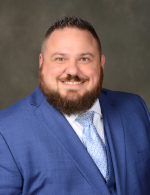
Carlo A. LaMonica
Moscow, Pennsylvania
5.0· 134
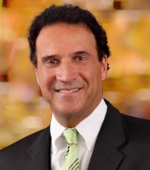
Jerry Robert Knafo
Allentown, Pennsylvania
5.0· 60

Jennifer Gilliland Vanasdale Esquire
Cranberry Township, Pennsylvania
5.0· 47

Gary Green
Philadelphia, Pennsylvania
5.0· 47

Michael Anthony O'Donnell
Kingston, Pennsylvania
5.0· 43