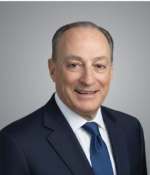
Robert E. Williams, General Attorney in Jacksonville, Florida
Over 20 years of legal practice · focused on General, Litigation, and Real Estate
ShareholderatMarshall Dennehey
Jacksonville, FL
Practicing general in Jacksonville since 2006.
- 20+
- Years practicing
- 2
- Bar admissions
Practices in
Are you Robert E. Williams?
This profile was built from public bar records and is still unclaimed. Claim it free to control your photo, bio, and fees — and get client inquiries sent straight to you.
Quick answer
Robert E. Williams is a shareholder based in Jacksonville, FL. The practice focuses on General, Litigation, and Real Estate. Robert has over 20 years of legal experience. Currently practicing at Marshall Dennehey.
- Based in
- Jacksonville, FL
- Experience
- over 20 years
- Known for
- General · Litigation · Real Estate
- Handles General, Litigation, and Real Estate matters from Jacksonville, FL.
- Over 20 years of practice as a licensed attorney.
About Robert E. Williams: Robert E. Williams is a shareholder based in Jacksonville, FL. The practice focuses on General, Litigation, and Real Estate. Robert has over 20 years of legal experience. Currently practicing at Marshall Dennehey.
Areas of practice
Robert's practice areas in Jacksonville
Robert concentrates on general, litigation, real estate, and insurance. Each area below outlines the kind of case Robert handles, typical outcomes to expect, and how the intake process starts.
General
View other General attorneys
Litigation
View other Litigation attorneys
Real Estate
View other Real Estate attorneys
Insurance
View other Insurance attorneys
General cases in Jacksonville, Florida
Robert takes general matters in Jacksonville, Florida. Typical engagements include intake calls to scope the issue, review of any records or filings you already have, and a written strategy memo before Robert agrees to represent you.
Litigation cases in Jacksonville, Florida
Robert takes litigation matters in Jacksonville, Florida. Typical engagements include intake calls to scope the issue, review of any records or filings you already have, and a written strategy memo before Robert agrees to represent you.
Real Estate cases in Jacksonville, Florida
Robert takes real estate matters in Jacksonville, Florida. Typical engagements include intake calls to scope the issue, review of any records or filings you already have, and a written strategy memo before Robert agrees to represent you.
Insurance cases in Jacksonville, Florida
Robert takes insurance matters in Jacksonville, Florida. Typical engagements include intake calls to scope the issue, review of any records or filings you already have, and a written strategy memo before Robert agrees to represent you.
Biography
Robert E. Williams, general attorney serving Jacksonville
Robert E. Williams is a shareholder based in Jacksonville, FL. The practice focuses on General, Litigation, and Real Estate. Robert has over 20 years of legal experience. Currently practicing at Marshall Dennehey. Robert works from Jacksonville, Florida and takes on general matters across the region.
Rob is a member of the Casualty Department. He has experience litigating a wide range of general liability matters representing insureds and self insureds, individuals and national corporations in cases involving motor vehicle liability, premises liability, first party and third party property insurance, product liability, and personal injury.
Prior to joining the firm, Rob worked as Staff Counsel for AIG, defending AIG, its subsidiaries and its insured customers related to general liability litigation which included bodily injury, trucking, property damage, uninsured/underinsured coverage, and subrogation disputes. He has assisted in various insurance defense matters, including mass tort (asbestos) litigation. Rob also has prior experience in workers' compensation matters, defending several of these matters through bench trials to final order by the judges of compensation throughout the state of Florida, and in some instances through appeal.
Before attending law school, Rob worked for several years in the mortgage banking industry. He is admitted to practice in the state of Florida.
Classes/Seminars Taught
•Adjuster Law & Policy, State of Florida, Department of Financial Services, Bureau of Licensing
•Adjuster Ethics, State of Florida, Department of Financial Services, Bureau of Licensing
Published Works
•“A Recent and Thorough Discussion of Negligence and Premises Liability in Florida by the Second District of Florida,” Defense Digest, Vol. 28, No. 12, December 2022
Thought Leadership
Defense Digest
A Recent and Thorough Discussion of Negligence and Premises Liability in Florida by the Second District of Florida
December 1, 2022
Key Points:Property owner is not, by that status alone, responsible for injuries caused solely by a tenant or lessee’s activities on the property.Property owner’s right to enter leased premises is not sufficient to constitute control over property so as to impose duty on landlord to protect third parties, even where property owner may have been able to generally instruct people not to do certain activities.It happens all the time. A complaint comes in, there are several counts with several theories of liability seeking damages for personal injuries, seemingly based on the simple fact that the named defendant(s) own the property. In a lengthy discussion on the theories commonly (and sometimes uncommonly seen), the Second District Court of Appeal in the case of Ruiz v. Wendy’s Trucking, LLC, et al., 2022 WL 4389879 (Fla. Dist. Ct. App., Sept. 23, 2022), affirmed a summary judgment in favor of the defendant property owner faced with such theories.The plaintiff, Antonio Ruiz, was severely injured while performing maintenance on a commercial truck owned by a third party, Wendy Carbrera, in a parking lot owned by the defendants, Roberto and Jesus Garcia. The Garcias hired a third party, Eglisbel Ginarte, to find truck owners to enter into leases for parking spots on a portion of the lot. At the time of the accident, there was no written lease agreement between Carbera and the Garcias.The plaintiff’s operable complaint alleged that the Garcias, as the lot owners, had a non-delegable duty to maintain their premises in a reasonably safe condition and to prevent unreasonable and dangerous activities on the lot. After several depositions, with varied testimony regarding the repair work on the property, the Garcias filed a motion for summary judgment, arguing there was no evidence that the condition on the property caused the accident. They also argued the plaintiff was a licensee on the property (such that the duty of reasonable care did not apply).The plaintiff responded to the motion for summary judgment, arguing that there was a disputed material fact as to whether the Garcias created a foreseeable zone of risk by permitting the repairs on their lot without proper safety measures. They also argued that the Garcias owed the plaintiff a duty of reasonable care under the ordinary negligence standard because the accident, based on testimony and evidence, was a result of their active or passive negligence rather than a defective condition of the lot.The trial court ruled that there was no duty owed to the plaintiff based on the facts of the case, which involved a truck that had been permitted to be parked on the lot. The plaintiff appealed to the Second District Court of Appeal, which affirmed that the Garcias, as property owners, did not owe a duty to the plaintiff.In its discussion of the plaintiff’s ordinary negligence liability/premises liability theories, the court addressed the plaintiff’s “active” negligence theory by finding that there was no active negligence by the Garcias as property owners because the accident (the truck breaking loose from whatever was holding it in place and running over a person) could have happened anywhere. Had it happened off the Garcias’ property, then the plaintiff would have had no basis to sue the defendants. There was no evidence that this was a case where the property owner or one of his/her agents operated equipment on the property and created a dangerous condition.The court then turned to the plaintiff’s allegation that the Garcias failed to prohibit mechanical repairs on the lot or implement safeguards regarding same, which it considered to be an allegation of “passive” negligence under both the ordinary negligence theory and premises liability theory. Even if the plaintiff was considered an invitee, the same standard of reasonable care applied under both of these theories.The court distilled the plaintiff’s argument as follows: that the Garcias owed the plaintiff a duty to prevent mechanical work from being performed on the lot by its lessees or invitees without having safeguards in place. The court ruled that there was no known dangerous condition because it was undisputed the lot was being used for parking, and the Garcias did not create a dangerous condition by owning the lot and allowing trucks to park there. The court specifically indicated that, if a dangerous condition was created by the mechanical work on the lot, the Garcias had no involvement in it because the condition was created by truck owners (lessees), who had requested such work to be done on the lot or by truck mechanics (the plaintiff), who had opted to perform work on the lot themselves.The plaintiff further argued that the right to control the property by the Garcias (the right to enter the property and stop people from working on the trucks) was a factual issue to be determined by the jury, such that a genuine material issue of fact prohibited entry of summary judgment. The court found that even though the Garcias may have been able to generally instruct people to stop performing mechanical work on the lot, this did not render them in control of their lessees’ (i.e., owners of the trucks who lease parking space from the Garcias on the lot) operations and activities.Defending these type of cases necessarily involves navigating a response to all attempts by plaintiffs’ attorneys to establish a duty of care on the part of a property owner under Florida case law. The Second District Court of Appeal’s analysis and holding in Ruiz provides a roadmap for evaluation of the heavily fact-dependent question of property owner liability.
How Robert handles general matters
Rob is a member of the Casualty Department. He has experience litigating a wide range of general liability matters representing insureds and self insureds, individuals and national corporations in cases involving motor vehicle liability, premises liability, first party and third party property insurance, product liability, and personal injury. Prior to joining the firm, Rob worked as Staff…
Who Robert represents
Robert reviews new inquiries case-by-case for general, litigation, and real estate matters in Jacksonville and the surrounding Florida area.
Credentials
Credentials — where Robert studied and practices
University of Florida Levin College of Law
J.D. · 2005
Honors: Dean's List, 2003 Washington and Lee University
B.A. Majors · 1995
Jurisdictions
Robert's state bar admissions
U.S. District Court
2015 · ACTIVE
Florida
2006 · ACTIVE
Robert studied at J.D. in University of Florida Levin College of Law and B.A. Majors in Honors: Dean's List, 2003 Washington and Lee University.
Law school and academic background
Robert completed J.D. in University of Florida Levin College of Law and B.A. Majors in Honors: Dean's List, 2003 Washington and Lee University. Formal legal training is one signal of substantive knowledge — the day-to-day practice Robert runs in Florida is where that training gets applied to real client questions.
Affiliations
Robert's professional memberships and bar associations
Associations & Memberships •E
membership
Robert Williams Inn of Court
Barrister, 2008 - present · membership
Locations
Robert E. Williams's office in Jacksonville
Robert's primary office is at Bank of America Tower, 50 N. Laura Street, Suite 1900, Jacksonville, FL, 32202. In-person meetings are by appointment; a phone intake usually comes first.
Marshall Dennehey
Bank of America Tower, 50 N. Laura Street, Suite 1900
Jacksonville, FL 32202
Open in Google MapsClient feedback
Client reviews of Robert E. Williams
Robert has not yet collected verified client reviews on LawyersListed. Reviews here are all from confirmed clients; anonymous ratings are moderated out.
No reviews yet
Only verified clients who have consulted with Robert E. Williams can leave a review.
Schedule your consultationHiring guide
How to hire Robert E. Williams — what to expect in your first consultation
Working with a new general attorney should feel structured. Here's how the first two conversations with Robert usually go, from the moment you request a consult to the day representation begins.
Consultation formats and pricing
Robert charges for the initial consult. That fee is credited toward representation if you retain Robert's office.
What to bring to your first meeting
Bring any documents you already have — police reports, medical records, filed pleadings, correspondence from an insurer, a copy of the contract at issue. If you're not sure, err on the side of bringing everything; Robert will tell you what matters and what doesn't.
Questions to ask a general attorney in Jacksonville, Florida
A short list to run through before you commit: How many general matters have you handled in the last year? What's your fee structure? Who else in the office will work on this? What's your realistic estimate of timeline and range of outcomes? How do I reach you between meetings?
Fees & payment
Fees, payment methods, and consultation options for Robert
Robert discusses fees during intake so the arrangement fits the matter. Contingency, hourly, and flat-fee options are all common in general practice — ask which fits.
Hourly rates, contingency fees, and flat-fee options
Every general matter is priced differently. Simple document review might be a flat fee. Injury litigation is often contingency. Complex commercial disputes usually run hourly with a retainer. Robert confirms the model in the engagement letter before any work starts.
Payment methods and payment plans
Robert's office accepts standard payment methods. Ask about payment plans if the retainer is a stretch — many general practices work with clients on structured schedules.
Frequently asked
Frequently asked questions about Robert E. Williams
How much does it cost to hire Robert for a general case?
Cost depends on the type of matter, the fee model (contingency, flat, hourly), and how contested the case becomes. Robert walks through the likely range during the consult so there are no surprises.
Does Robert offer a free consultation?
Robert charges for the initial consult; that fee is credited toward representation if you retain Robert's office. Some general attorneys offer free consults — check Robert's current terms during booking.
How long do general cases in Florida typically take?
Simple general matters can wrap in a few weeks; disputed cases can run 6–18 months from intake to resolution, longer if the matter goes to trial. Robert gives a realistic estimate for your facts at the consult — vague answers here are a red flag.
Can Robert take my case if I'm outside Jacksonville?
Robert is licensed in Florida. Matters governed by Florida law are the natural fit. Out-of-state matters are handled case-by-case, sometimes with local co-counsel. Ask during intake — Robert will tell you if the case is a fit or refer you to someone closer to your court.
What should I bring to my first meeting with Robert?
Bring every document that touches the dispute: contracts, correspondence, police or medical reports, filed pleadings, invoices, photographs, insurance letters. Also bring a written timeline of what happened, in your own words. Robert will filter what matters — over-preparing at intake is always cheaper than needing a second meeting.
Is Robert accepting new general clients right now?
Robert's intake status shifts week to week. Submit the form; the office will confirm availability or refer the matter out.
Areas served
General attorneys serving Jacksonville, Miami and Tampa in Florida
Robert handles general matters throughout Florida. Each city below is a direct link into the search page for verified general attorneys in that community.
- Jacksonville5,497 attorneys
- Miami15,918 attorneys
- Tampa9,739 attorneys
- Orlando7,352 attorneys
- Fort Lauderdale6,726 attorneys
- Tallahassee4,383 attorneys
- West Palm Beach3,699 attorneys
- Boca Raton3,668 attorneys
- Coral Gables3,397 attorneys
- Naples2,155 attorneys
- St Petersburg2,098 attorneys
- Sarasota1,994 attorneys
More counsel
Other top-rated general attorneys in Florida
If Robert's intake is full or the fit isn't right, these general attorneys in Jacksonville handle similar matters. Every profile below is verified and open to consultations.